

2100
8 CPEIn order to make customer-centric audit recommendations, how can I, as an internal auditor, better understand the processes to be audited from the customer’s point of view?

Visit our YouTube Channel and explore further videos about Gamified Trainings.

€999,00
Get 12 month access to all of our 70+ gamified trainings and obtain over 350+ CPE points.
In order to make customer-centric audit recommendations, how can I, as an internal auditor, better understand the processes to be audited from the customer’s point of view?

How can I identify and analyze emerging risks for dynamic and forward-looking audit processes?

What methods and approaches need to be learned for an Agile approach in the audit team?

What methods and approaches need to be learned for an Agile approach in the audit team?

What is the most effective way to achieve your goals with a suitable plan and adequate self-discipline?

What is the best way to provide meaningful feedback to my auditees as well as to my audit team colleagues?

How to make better decisions during your internal audit engagements?

To integrate the right solutions into audit interviews and closing meetings, how can I better understand the conversational styles of my business counterparts?

Master the fundamentals of storytelling to engage your audience and apply a six-question strategy as a starting point for creating effective stories.

How to learn insights about ESG-Sustainable Development Goals?

How to learn insights about ESG-Sustainable Development Goals?

How to get fit for ESG Audit Assurance?

How can I achieve a great audit performance even under pressure? How to manage stress in a better way?

How do I manage to convince the auditees of my proposed solutions?

How can I learn to improve my assertiveness in order to constructively resolve conflicts during audit interviews and final audit meetings?

General Data Protection Regulation

How to work more efficiently and goal-oriented in audit remote teams?

How can you increase audit team awareness for IT-Security and Defence against social engineering risk?
As an internal auditor, how can you build relationship management with trust?
Emotional intelligence - an important success factor for daily audit work.
How can we keep up with the risk speed of our external environment and process changes?

How to coach your auditee as trusted advisor to new solutions?
How can we communicate the essential information even better?

Preparing a script. How can you improve auditee satisfaction in an audit closing meeting?
Aids and audiovisual design. How can you improve auditee satisfaction in an audit closing meeting?
Public speaking skills. How can you improve auditee satisfaction in an audit closing meeting?

Learn to recognize the six basic emotions and their derived emotions in yourself and others and discover strategies for emotional self-regulation that can be applied in both professional and personal contexts.

How can occupational safety audits and ergonomically optimized processes contribute to better performance?
Get ESG insights and test your ESG audit knowledge in an exciting adventure

How can you increase audit team motivation and get high-performance audit teams?
How can you identify the most important IT risks for integrated audit approach?

How can I understand people better and win them for audit solutions, recommendations?

How can you organise your daily audit tasks most efficiently?
How to equip your audit team with essential techniques to assess governance structures?

How can I organise my work processes so that they make me happy?

What aspects are important when auditing transformation processes? and how can I support these transformation processes as an internal auditor?
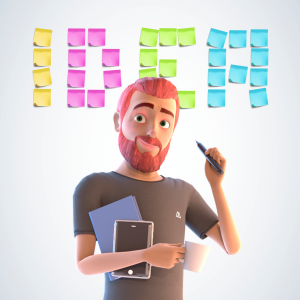
How can you create better solution-based audit recommendations?

How to understand inequalities caused by gender stereotypes, roles, and biases and what impact they have?
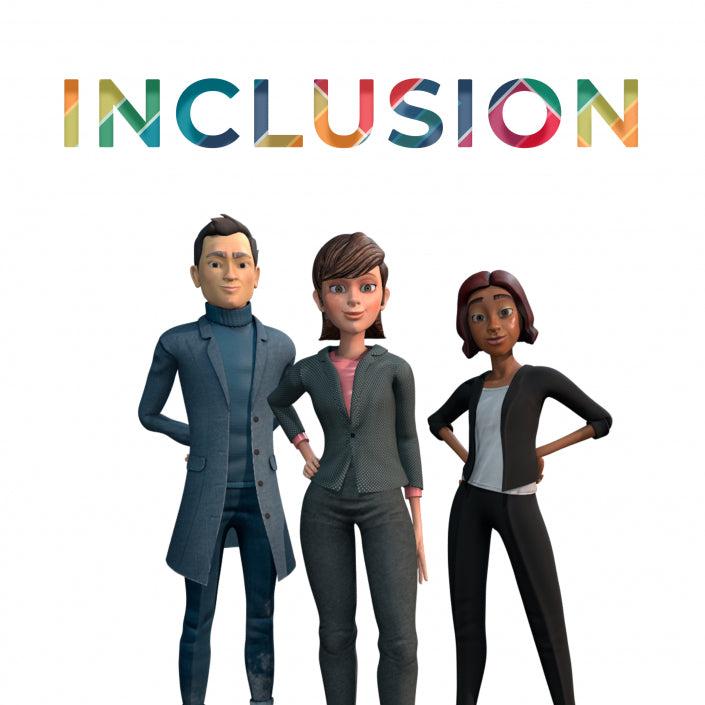
How to identify and manage unconscious biases? Practice handling prejudices and dismantling the stereotypes.

How to leverage Artificial Intelligence for creativity, innovation, and ethical business decisions?

How to foster gender equality and implement inclusive workplace practices?
How can optimal communication be implemented in bottleneck situations?

How can you develop successful conflict resolution strategies for better output in internal audit engagements?

How can you optimize your health to promote your own physical and mental well-being?

How can I improve our audit team collaboration and overcome prejudices?

How can you best use the power of crowd intelligence professionally and personally?
Explore the relationship between your goals and your network of contacts and discover the networking tactics that will enhance your relationships.
Discover how to take advantage of opportunities to grow your network of contacts and learn the simple actions you can take to nurture relationships with people in your network.
Profit from your network - learn how to make and manage requests to create profitable synergy with your network of contacts.

How can you and your team members become more resilient during high impact audit engagements?

How to analyze the main risks and characteristics of an optimal sales acquisition process?
How to use emails and phone calls and more appropriate media as primary channels for sales acquisition?
How to analyze important aspects of the social media sales channel? What are the risks and optimization potentials here?

How to improve your skills as an audit negotiator and learn to resolve conflicts?
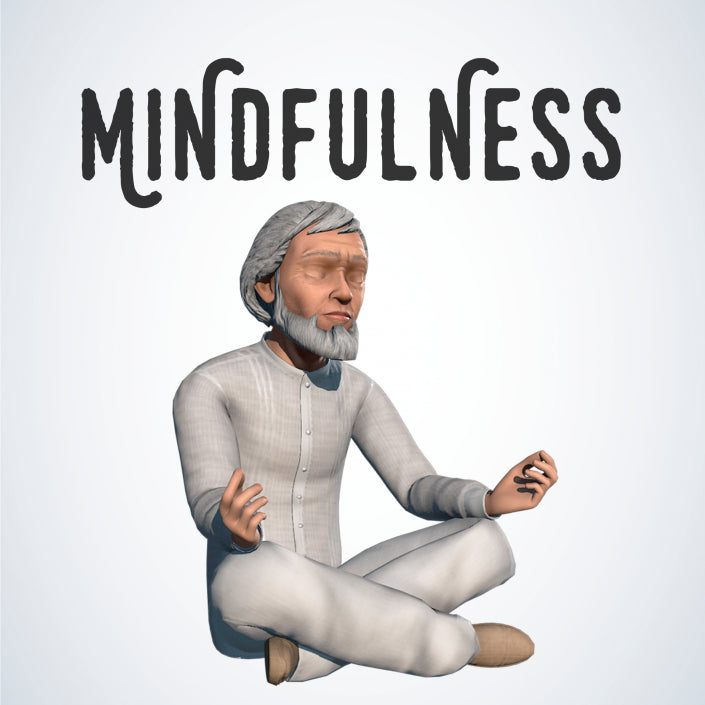
How can you use the principles of mindfulness to become even more focused in your day-to-day auditing business and in your conversations?
What modern fraud audit approaches are available?

How can you increase audit team motivation and get high-performance audit teams?

Acquire knowledge and learn the basic guidelines for preventing money laundering and terrorist financing.

What topics might be important in a diversity audit?

Change management starts with people, how can I best engage auditees and get them inspired for change when making solution-oriented audit recommendations?

How can I better mitigate an emotional topic and take the emotion out of an audit interview or audit exit meeting?
How to learn and understand the different forms of sexual harassment?

How to get faster and more precise audit team processes?

How can you become an even better internal auditor by active listening in audit interviews?

How can I more clearly define the objectives for performing my internal audit engagements?

As an audit team leader, how can you lead your audit teams in a more effective and focused way?

Learn and understand the fundamentals of the OKR methodology and how it is applied in organizations.

Understand the principles, scope, and obligations set out in the European Artificial Intelligence Regulation.

How to support sustainable growth through awareness and action?

Understand the meaning of the ecological footprint and its main types and practice actions that help preserve and protect the planet's ecosystem.

Strengthen your ability to ask for, receive, and give feedback effectively, using the SBI model and apply good communication practices.

Recognize the benefits of integrating sustainability into corporate strategy and discover real-world examples of how ESG criteria are applied around the world.

How can you improve your accountability to auditees and your team colleagues?
Which occupational health and safety measures are necessary to optimally design the working environment?

How to improve positive thinking and increase positivity?
Learn strategies to improve habits and develop new positive habits in personal and professional life.

Learn how to identify, analyze, and solve problems in a structured manner.
How can I increase the output of my audit interviews and audit team meetings more effectively?

How can you motivate your audit team to perform at their best?

How to adopt an inclusive outlook and raise bias awareness?
How can I complete my audit engagements on time with better time management?

How can I better read and interpret non-verbal communication during audit interviews?
No trainings match your search.
In a world of digital transformation, new forms of language and communication are necessary, but also new learning and thinking structures, the characteristics of which cannot be trained in linear but only in networked learning worlds.
The fourth industrial revolution is in full progress. The digitalization of living and working environments is changing our society and thus also the way we learn. Under these conditions, effective collaboration is becoming even more process-oriented, networked and with a more holistic focus on value creation. Adequate learning and training opportunities are needed to meet these requirements. Employees should be able to choose their own learning path and speed of learning independent of time and location. Under these didactic preconditions, learning opportunities with the help of serious business games come to the spotlight.
Due to their increased use in personnel development, Gamified Trainings have been an important subject of education and training for several years. In the age of digital transformation, video games have not only found their way into children’s and living rooms, but also in the area of business education the trend is moving towards computer-based learning games, so-called Gamebased Learning or Gamified Trainings.
In contrast to traditional (non computer-based) learning games, serious business games use motivational methods from digital entertainment media and the film industry. In order to animate the training participant to learn in a special way, parasocial interactions and relationships are established between the training participant and the so-called non-personal character in the Gamified Training.
Game-based learning refers to the use of leveraging the inherent excitement and stickiness of a game environment as the framework for an educational course. To be effective, participants must develop real life knowledge and skills while immersed in an entertaining and addicting game. Serious Business Games are visually appealing and dynamic, they are both exciting and addicting and their use in education leads to higher learning rates and higher course completion rates that tradition “on-line” training courses.
In order to make the right decisions in everyday working life, experience is needed that can only be acquired to a limited extent through theoretical input. As a rule, they are gained in professional practice, on the one hand through daily actions and on the other hand mostly on the basis of the knowledge gained through correct or wrong decisions.
At this point, serious business games can make a special contribution: they create a risk-free space for action, in which users can try out various strategies for everyday business life in a business game. This happens for the training participants without having to bear possible negative consequences professionally, which would entail acting in reality, and they receive direct feedback about it. Serious business games thus contribute to improving the planning and decision-making behavior of individuals and groups.
Serious Business Games are training courses and at the same time animating games, which were not developed for entertainment purposes. In technologically advanced areas, such as medicine, aviation or the military, numerous Serious Business Games have already been developed for educational purposes. In the area of business training, however, they have only been introduced in recent years.
Classroom training is complex to organize and costly to deliver. Traditional e-learning courses are not engaging and have low completion and knowledge transfer rates… More organizations are using Serious Business Games to effectively teach the important soft skills that are vital for advancement.
In the context of company training, Serious Business Games offer users numerous gamification techniques for their training, which allow them to further improve the benefits gained through the courses.
Another priority in educational games is experiential learning through the player’s handling of learning objects in simulations. Serious business games offer the user the opportunity to acquire the content either independently or in cooperation or interaction within a learning and training community. This is accompanied by an intrinsic motivation to learn, since the participant is rewarded by the momentum or positive gaming experience. The possibility to provide employees with normative knowledge in the form of “knowing that”, e.g. for the execution of individual work processes and methods, as well as the simulative implementation in the form of “knowing how” for practical application, is the special strength of this form of learning.
The term gamificationrefers to the blending of immersive game-typical properties to the learning environment.
The use ofgamificationin education ensures that users not only learn key concepts, but also practice applying acquired knowledge in exciting real-world simulations.
The use ofgamificationin competence training ensures that users not only learn, but also practice the application of what they have learned by using game mechanisms on a high-performance, globally accessible learning platform.
Serious business games allow new concepts for the achievement of lifelong learning of knowledge and soft skills, because they offer the possibility to distribute existing knowledge within the company and to integrate new knowledge into the company and its processes during the business game. At the same time, serious business games offer the possibility to convey the “Know How” to all employees in a uniform way.
Serious Business Games can be used for this in different ways:

Check out more success stories on our YouTube Channel.